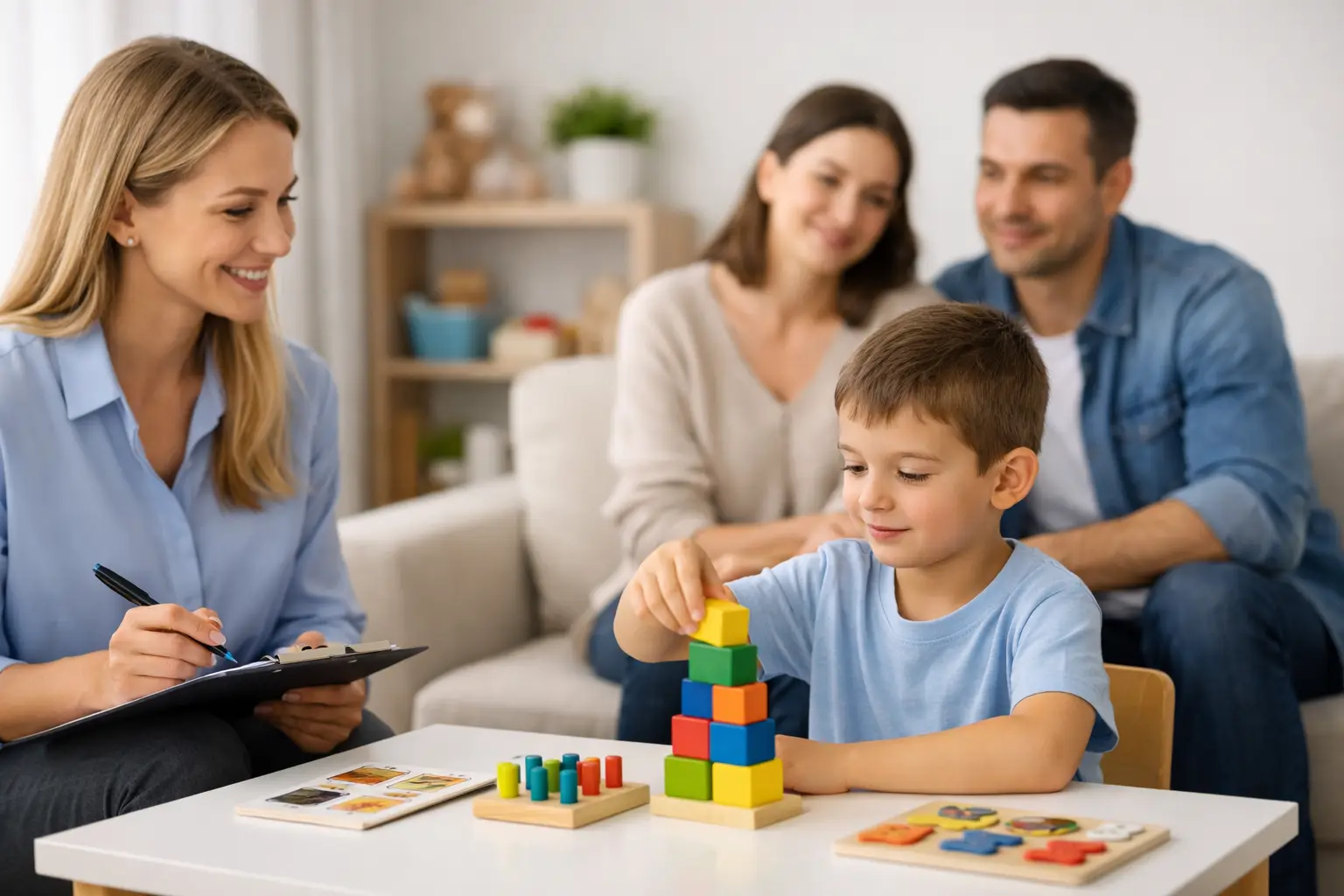
When parents ask for aba therapy goals examples, they are usually not looking for clinical jargon. They want to know what therapy might actually help their child do - ask for help, get through a bedtime routine, tolerate a haircut, join a game, or make it through the grocery store without everything falling apart. That practical lens matters, because good ABA goals should connect directly to daily life.
ABA therapy goals are not one-size-fits-all. Two children can both have communication delays, but one may need to learn how to request basic needs while another may be ready to build conversation skills. The most meaningful goals are individualized, measurable, and useful beyond the therapy setting. They should also reflect the family’s priorities, not just a checklist.
What makes ABA therapy goals effective?
A strong goal is specific enough to measure and flexible enough to matter in real life. "Improve behavior" is too broad to guide treatment. "Will use a 2-3 word request to ask for a preferred item in 4 out of 5 opportunities" gives a care team something clear to teach, track, and adjust.
That said, clarity alone is not enough. A goal can be measurable and still not be the right fit. If a child is struggling with transitions all day, a program focused only on table work may miss the issue creating the most stress for the family. Effective goals balance clinical assessment with everyday function.
In practice, ABA goals often focus on communication, social interaction, daily living skills, behavior reduction, and learning readiness. The exact mix depends on the child’s strengths, needs, age, and environment.
ABA therapy goals examples by skill area
The examples below are meant to show what goals can look like, not what every child should work on.
Communication goals
Communication is often one of the first priorities because it affects so many other areas. When a child can express wants, needs, discomfort, and preferences more clearly, frustration often decreases as well.
Early communication goals might include requesting a snack, asking for help, making choices between two items, or responding when their name is called. A child using spoken language may work on expanding from single words to short phrases. A child using AAC or picture communication may work on independently selecting the correct symbol to request a break.
Examples of communication goals can include:
- Will request preferred items using words, signs, or AAC in 80% of observed opportunities.
- Will answer simple yes or no questions accurately across home and therapy settings.
- Will follow one-step directions such as "sit down" or "give me the toy" with minimal prompting.
- Will label common objects, people, or actions during play and daily routines.
The right communication goal depends on where the child is starting. For some families, a meaningful first step is simply helping a child communicate "all done" instead of dropping to the floor or crying.
Social skills goals
Social goals can be helpful, but they should be realistic and respectful of the child’s developmental level. Not every child needs to be pushed into constant peer interaction. Sometimes the goal is just learning to tolerate being near other children or participate in a short shared activity.
Examples might include taking turns during a game, greeting familiar adults, responding to peer invitations, or engaging in parallel play without distress. Older children may work on conversation skills, perspective taking, or recognizing when someone is not interested in continuing an interaction.
Common social goals include:
- Will engage in turn-taking with a peer or adult for 3-5 exchanges.
- Will initiate interaction with a peer using a greeting, question, or shared comment.
- Will remain in a small group activity for a set amount of time.
- Will identify basic emotions in self or others using pictures, stories, or real-life examples.
These goals are most helpful when they support genuine participation, not forced performance. A child does not need to become highly social to make progress. The aim is often comfort, connection, and functional interaction.
Daily living and independence goals
For many families, daily living goals are where ABA feels most immediately useful. These are the routines that shape mornings, mealtimes, school prep, hygiene, and bedtime.
A child may work on toileting steps, hand washing, brushing teeth, putting on shoes, cleaning up toys, or completing parts of a visual schedule. For some children, even tolerating these routines without high distress is a major and meaningful milestone.
Examples of daily living goals include:
- Will complete a 3-step hand-washing routine with visual or verbal prompts.
- Will put on shoes and coat independently before leaving the house.
- Will follow a bedtime routine with reduced problem behavior.
- Will transition between daily activities using a schedule or timer.
These goals often matter because they reduce stress for the whole family. They can also support school readiness and long-term independence.
Behavior reduction goals
Behavior reduction goals are often misunderstood. ABA should not focus on suppressing harmless traits or making a child appear "typical" for someone else’s comfort. The focus should be on behaviors that interfere with safety, learning, communication, or quality of life.
Examples include aggression, self-injury, elopement, property destruction, or severe disruptions that prevent participation in daily routines. A behavior goal should not just say what needs to stop. It should also teach what the child can do instead.
For example, if a child hits when work becomes too hard, the treatment plan may include teaching a break request, adjusting task difficulty, and building tolerance gradually. If a child runs away in public places, goals may focus on safety responses, staying within proximity, and stopping when called.
Examples of behavior-related goals include:
- Will use a functional communication response to request a break instead of engaging in aggression.
- Will remain within a safe distance of caregiver during community outings.
- Will transition away from preferred activities with fewer prompts and less distress.
- Will tolerate denied access to an item by using a taught coping strategy.
This area is where individualized assessment matters most. The same behavior can happen for different reasons, so the intervention and goals should match the actual pattern, not just the surface behavior.
Learning readiness goals
Some children need foundational learning skills before more advanced targets make sense. These goals often support success in school, therapy, and home routines.
Examples include sitting for short periods, attending to instruction, matching items, imitating actions, responding to simple questions, or waiting briefly for a preferred item. These may sound small, but they can open the door to much broader progress.
A child who learns to attend for two minutes, imitate a modeled action, and respond consistently to simple directions may be much more ready to build language, play, and academic skills.
How goals are chosen in real treatment planning
Families sometimes worry that goals are selected from a standard list. In quality ABA care, that should not be the case. Goals are usually based on assessment data, caregiver input, direct observation, and discussion about what would make life easier or more meaningful right now.
One family may prioritize potty training. Another may need support with school transitions or dangerous behaviors in the community. Another may be most concerned that their child cannot tell anyone when they are hurt, hungry, or overwhelmed. All of those are valid places to start.
This is also where trade-offs come in. A child cannot work on everything at once without the plan becoming scattered. Good programming often means choosing a manageable number of priorities, building momentum, and adjusting as progress happens.
What families should look for in ABA therapy goals examples
When reviewing sample goals or discussing treatment recommendations, families can ask a few practical questions. Does this goal help my child function more independently? Will this skill matter at home, school, or in the community? Is it written clearly enough that progress can be tracked? Does it respect my child’s needs and personality?
It is also reasonable to ask how a goal will be taught and how success will be measured. A thoughtful provider should be able to explain the plan in plain language. If a goal sounds overly technical but does not connect to daily life, ask for clarification.
For families starting services, this part of the process can feel overwhelming. A provider such as Raven Behavior Analysis should be able to walk you through the reasoning behind each recommendation and help you understand what progress may realistically look like over time.
Progress does not always look dramatic at first
Parents often hope for big breakthroughs, and sometimes those happen. More often, progress starts with smaller changes that build on each other. A child asks for help instead of crying. A trip to the store lasts ten minutes longer than it used to. Bedtime goes from ninety stressful minutes to forty-five calmer ones.
Those changes count. In many cases, they are exactly what meaningful ABA work is supposed to produce.
If you are reviewing aba therapy goals examples, try to focus less on what sounds impressive and more on what would help your child participate, communicate, and feel more successful in daily life. The best goals are not the ones with the most clinical wording. They are the ones that make ordinary days more manageable, more connected, and a little easier for your whole family.